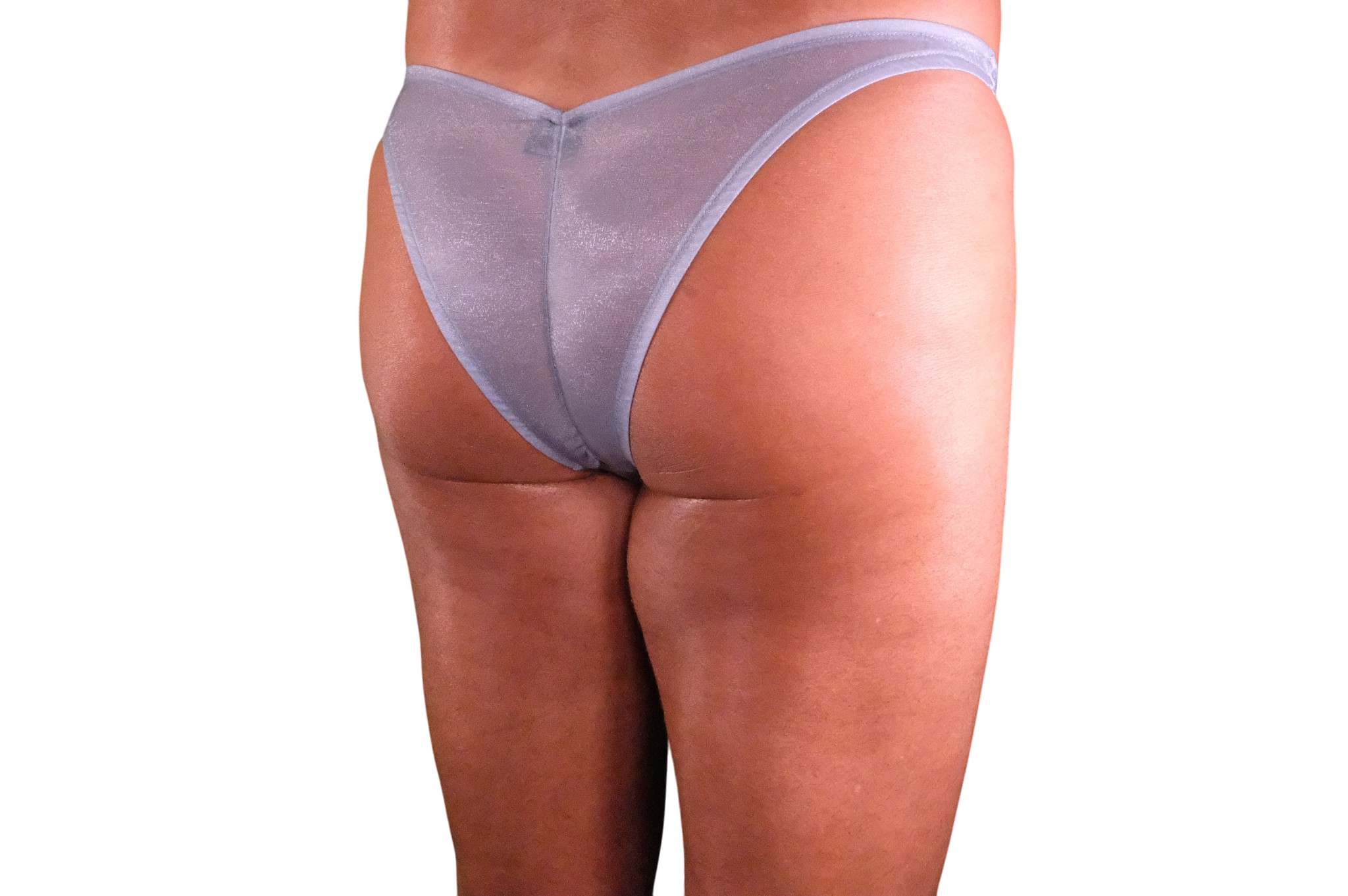
Men Are Choosing Swimwear Briefs, Bikinis, Thongs and More—No Longer Slaves to Shorts!
For generations, men’s swimwear came with an unwritten rule: wear shorts.
They could be short trunks, long trunks, board shorts, or enormous surf shorts hanging almost to the knees, but they were still shorts. Men who ventured into brief-style swimwear often discovered that an amazingly small piece of fabric carried an amazingly large collection of stereotypes.
Fortunately, men’s swimwear doesn’t have to work that way anymore.
Men increasingly have a much wider fashion vocabulary available to them: traditional swim briefs, racing briefs, European-style briefs, bikinis, Brazilian cuts, thongs, G-strings, micro bikinis, pouch designs, gender-neutral styles and many other variations.
The important development isn’t that every man is suddenly going to abandon his trunks.
It is that men have choices.
A man should be able to decide how much of his body he wants to cover rather than allowing an old cultural convention to decide for him.
If you love board shorts, wear them.
If you prefer a classic swim brief, wear it.
If your ideal swimsuit is a tiny bikini or thong, that should be a fashion choice too.
Men are no longer required to be slaves to shorts.
How Did Men’s Swimwear Become So Conservative?
The strange thing about men’s swimwear is that it hasn’t always followed a straight progression toward greater freedom.
Styles have expanded and contracted over generations.
At different points in the twentieth century, relatively brief men’s swimsuits became perfectly ordinary. Competitive swimming further normalized close-fitting briefs because they were practical in the water.
Yet in parts of American culture, particularly during the rise of surf and board-short fashion, men’s swimsuits became enormous.
Shorts extended farther down the thigh.
Waistbands became loose.
Fits became baggy.
Eventually some men’s “swimsuits” contained so much material that they looked more appropriate for walking around town than swimming.
Meanwhile, women’s swimwear traveled in almost the opposite direction.
Women’s bikinis became smaller.
High-cut legs became common.
Thong bikinis entered mainstream resort fashion.
Brazilian bottoms became familiar.
Micro bikinis pushed coverage even further.
Men watching this transformation could reasonably ask:
Why are women allowed an enormous range of coverage while men are expected to wear shorts?
Increasingly, men aren’t accepting that limitation.
The Swim Brief Never Really Disappeared
The classic men’s swim brief has been around for generations.
Competitive swimmers understand its advantages immediately. There is little unnecessary fabric, almost nothing flapping around the legs, and excellent freedom of movement.
The famous Speedo-style silhouette also established an important principle:
A man’s swimsuit doesn’t need legs.
That seems obvious today, but it represents a major departure from the idea that men’s swimwear should essentially be waterproof shorts.
Once the legs disappear, designers gain enormous freedom.
The sides can become narrower.
The waist can become lower.
The front can become more anatomically shaped.
The rear can offer full, moderate, Brazilian, cheeky, or minimal coverage.
Suddenly the humble swim brief becomes the starting point for an entire world of men’s swimwear.
Men’s Bikinis Take the Brief Further
The men’s bikini is where things become especially interesting.
There isn’t one universally agreed dividing line between a very small swim brief and a bikini, but the bikini aesthetic generally emphasizes narrower sides, higher leg openings, lower rises, and less overall material.
That changes the visual proportions of the body.
More hip is exposed.
More upper thigh is exposed.
The legs can appear longer.
The waist becomes visually cleaner.
And instead of hiding the male body beneath shorts, the swimsuit works with its shape.
For men accustomed to board shorts, that first bikini can feel shockingly small.
After wearing it for a while, however, something interesting often happens:
It starts feeling like a swimsuit.
The novelty disappears.
The wearer goes swimming, lies in the sun, walks along the beach and realizes that he doesn’t need several square feet of fabric hanging from his waist.
Why Brief Swimwear Feels So Different in the Water
There is also a practical reason many men love minimal swimwear once they try it.
Swimming in a properly fitted brief is very different from swimming in loose shorts.
There is less fabric dragging through the water.
Nothing wraps around the thighs.
There are no wet legs clinging to the body after leaving the pool.
The garment contains only the material necessary to provide coverage and support.
When you get out of the water, there isn’t a pair of soaked shorts hanging from your waist.
For someone who actually enjoys swimming rather than merely standing beside the pool, the simplicity can be addictive.
Men’s Thong Swimwear Changes the Rules Again
If the bikini challenges the assumption that men need shorts, the thong challenges another assumption:
Why does a man’s swimsuit necessarily need to cover his entire butt?
Women’s fashion answered that question decades ago.
It doesn’t.
Men’s swimwear designers have increasingly explored the same territory.
A thong maintains front coverage while dramatically reducing rear coverage. Designs can range from relatively substantial athletic thongs to tiny micro styles.
The result is one of the most distinctive silhouettes in men’s swimwear.
It is also one of the styles most likely to feel intimidating the first time.
Your First Thong Can Feel Extremely Revealing
Putting on a thong privately is one thing.
Walking onto a beach wearing one is another.
The wearer is suddenly aware of areas of his body that have probably never been exposed in public before.
You may initially feel as though everyone is looking at you.
Most aren’t.
And in environments where thong swimwear is already familiar, the reaction may be remarkably uneventful.
That first experience can change someone’s perspective on swimwear permanently.
The question stops being:
“Can I get away with wearing this?”
and becomes:
“Do I like wearing this?”
That is a much healthier way to approach fashion.
Then Come the G-Strings
The G-string takes the thong principle even further.
Rear fabric is reduced to an extremely narrow strip or string, while the sides may also become exceptionally thin.
At that point, the swimsuit is essentially reduced to its essential components.
For men who love minimal tanning and maximum exposure, G-strings represent one of the smallest conventional swimsuit categories.
They aren’t going to suit every beach or every man.
They don’t have to.
Fashion freedom doesn’t mean everybody wears the same thing. It means different people can choose different things.
Micro Swimwear Pushes Men’s Fashion to the Edge
The rise of micro swimwear takes this freedom to another level.
A micro swimsuit isn’t simply a conventional brief in a smaller size. It is intentionally designed around minimum coverage.
The sides may be strings.
The rear can be tiny.
The front can be reduced to a highly engineered pouch that provides only the coverage the designer considers necessary.
This has created a fascinating category of men’s fashion in which the challenge is almost:
How small can a swimsuit become while remaining a swimsuit?
That question has generated micro bikinis, ultra-micro briefs, micro thongs, G-strings and pouch-oriented designs that would have seemed extraordinary during the height of the baggy-board-short era.
Pouch Swimwear Celebrates Male Anatomy
Another significant development is the men’s swimwear pouch.
Traditional shorts largely conceal the body’s natural shape. Modern Lycra swimwear can do exactly the opposite.
An anatomically shaped pouch can accommodate the male body rather than attempting to flatten everything behind a generic panel of fabric.
Different designers approach this differently.
Some offer supportive pouches.
Some minimize the profile.
Others create more naturally contoured silhouettes.
Still others make the pouch itself the central design feature of an ultra-minimal swimsuit.
This is one area where men’s swimwear can become distinctly male rather than simply copying women’s bikini construction.
Not Every Man Wants a Large Bulge
At the same time, modern men’s swimwear doesn’t have to emphasize anatomy.
Some men prefer a subtle profile.
Others actively seek a micro-bulge appearance.
Feminine men, gender-fluid wearers, and some transfeminine people may prefer swimsuits designed to create a flatter front.
This demonstrates just how broad the modern category has become.
A man can choose a swimsuit that emphasizes his anatomy.
Another can choose one that minimizes it.
Another can choose a traditionally masculine brief.
Someone else can wear an extremely feminine bikini.
The important point is choice.
Straight Men Don’t Have to Fear Bikinis
One of the most persistent old stereotypes associates small men’s swimsuits with sexual orientation.
Clothing doesn’t determine sexual orientation.
A gay man can wear board shorts.
A straight man can wear a thong.
A bisexual man can wear a Speedo.
None of those garments changes who the wearer is attracted to.
This sounds obvious, yet the stereotype has influenced men’s clothing choices for years.
Some straight men avoid styles they actually like because they are worried about what strangers might assume.
That gives strangers an extraordinary amount of power over someone’s wardrobe.
Men’s swimwear becomes much more interesting once that fear disappears.
Gay Men Helped Push Men’s Swimwear Forward
At the same time, gay men’s fashion deserves recognition for helping push the boundaries of men’s swimwear.
Gay beaches, resorts, cruises and pool parties have long provided environments where men can experiment with more revealing styles.
Briefs become bikinis.
Bikinis become thongs.
Thongs become micros.
What initially looks extreme gradually becomes familiar.
Fashion often evolves this way. A relatively adventurous group adopts something first, the broader public becomes accustomed to seeing it, and elements eventually spread into mainstream style.
Gay men’s swimwear culture has been particularly influential in demonstrating that the male body doesn’t need to disappear beneath shorts.
Men Are Discovering Body Confidence
There is another reason minimal swimwear can become surprisingly important.
It forces you to stop hiding.
Baggy clothing can become camouflage. A small swimsuit can’t perform that function.
Your stomach is visible.
Your thighs are visible.
Your hips are visible.
In a thong, most of your butt is visible.
That can initially produce considerable self-consciousness.
But repeated exposure can create the opposite effect.
Instead of continually asking whether your body is perfect enough to be seen, you begin accepting that ordinary human bodies are allowed to be visible.
You don’t need six-pack abs to wear a swim brief.
You don’t need to be 25.
You don’t need a particular penis size.
You don’t need a model’s body.
You need a swimsuit that fits properly, an appropriate location and enough confidence to wear what you actually like.
The Penis Question
Men moving from shorts into close-fitting swimwear frequently encounter something women generally don’t have to consider:
Their genital outline may be visible.
That is normal with form-fitting men’s clothing.
A properly designed swimsuit should maintain adequate coverage, but “covered” doesn’t necessarily mean “shapeless.”
Men accustomed to baggy shorts can initially feel self-conscious about this.
Over time, many simply become accustomed to the reality that bodies have contours.
The solution isn’t necessarily adding another foot of fabric. It is choosing a well-fitting swimsuit with the level of support and anatomical definition you personally find comfortable.
Smaller Men Can Wear Micro Swimwear Too
Penis size doesn’t determine whether a man “qualifies” to wear a bikini or thong.
In fact, men with smaller anatomy may find some compact pouch designs particularly easy to wear because they require less front volume.
Other men prefer suits engineered for more room.
The tremendous variety of modern pouch designs means men don’t have to treat anatomy as something embarrassing.
Find the cut that fits your body.
Better Tan Lines—or Almost No Tan Lines
One of the simplest advantages of smaller swimwear is tanning.
Board shorts cover an enormous amount of skin.
Briefs expose much more.
Bikinis expose more again.
Thongs leave most of the buttocks uncovered.
Micro thongs and G-strings can produce exceptionally small tan lines.
For sun lovers, this alone can make minimal swimwear attractive, although appropriate sun protection remains important—especially on skin that normally receives little exposure.
Vacation Is Often Where the Change Begins
Many men first experiment with smaller swimwear while traveling.
There is a psychological freedom associated with vacation.
You’re away from your usual environment.
Nobody at the resort knows what you normally wear.
The weather is warm.
Other vacationers may be dressed more adventurously.
That tiny bikini you were nervous about wearing at home suddenly seems possible.
So you wear it.
Then perhaps you try the thong tomorrow.
By the end of the vacation, the swimsuit that seemed unbelievably small on the first day may feel completely normal.
And when you return home, your old board shorts can suddenly feel enormous.
Beaches Are Different—Know Your Environment
Fashion freedom still involves judgment.
A thong that barely attracts attention at an adults-only resort may be inappropriate at a conservative family facility.
Rules concerning minimum coverage and nudity vary between countries, municipalities, beaches, hotels, pools, gyms, cruises and private resorts.
Very minimal swimwear deserves particular attention because the boundary between an ultra-micro swimsuit and prohibited exposure can become narrow.
Check local rules and venue policies.
Freedom to choose your swimsuit doesn’t eliminate the responsibility to choose one appropriate for the setting.
Start With a Swim Brief
If you’ve spent your entire life wearing shorts and want to experiment, there is no need to jump immediately into an ultra-micro G-string.
Start with a classic brief.
Wear it privately.
Swim in it.
Notice how much easier it moves through the water.
Then wear it somewhere you feel comfortable.
Once a conventional brief feels ordinary, try a narrower bikini if that interests you.
Perhaps later experiment with a thong.
You might eventually love micros.
Or you may decide the classic brief is perfect.
There is no competition.
The Confidence Ladder
Men’s minimal swimwear can almost be viewed as a confidence ladder:
Trunks → square cuts → swim briefs → bikinis → Brazilian cuts → thongs → G-strings → micro designs → ultra-micros.
You don’t have to climb every rung.
And the final rung isn’t automatically “better” than the first.
The ladder simply illustrates how someone accustomed to substantial coverage can gradually discover what level feels right.
For one man, freedom means finally wearing a Speedo.
For another, it means wearing a bikini.
For someone else, it means walking confidently onto the beach in a thong.
And the micro-swimwear enthusiast may wonder why he needs anything more than the smallest amount of fabric required for coverage.
Men Deserve the Same Fashion Freedom
Women’s swimwear demonstrates what happens when designers are allowed to explore virtually every possible level of coverage.
Women can choose swim dresses, one-pieces, tankinis, shorts, bikinis, Brazilian bottoms, cheeky cuts, thongs, G-strings and micros.
Nobody expects every woman to choose the same style.
Men deserve comparable freedom.
Some will remain loyal to board shorts forever.
Great.
Others will discover swim briefs.
Some will discover bikinis.
Some will discover thongs.
And a small but adventurous group will inevitably keep asking designers to make their swimsuits even smaller.
That variety makes men’s fashion better.
The End of the “Real Men Wear Shorts” Era
Perhaps the most outdated idea in men’s swimwear is that masculinity requires a particular amount of fabric.
It doesn’t.
Confidence isn’t measured in square inches of nylon or Lycra.
A man doesn’t become more masculine because his shorts reach his knees, nor less masculine because his swimsuit exposes his hips or buttocks.
Swimwear is clothing.
Choose it according to your body, personality, activities, destination and preferred style.
That principle is remarkably liberating once you actually adopt it.
Men’s Swimwear Is Finally Becoming Interesting
For too long, men’s swimsuit shopping could be summarized as:
“Which pair of shorts do you want?”
Today the question can be:
“What kind of swimsuit do you want?”
That tiny linguistic difference represents an enormous fashion change.
Maybe you want trunks.
Maybe a classic racing brief.
Maybe a low-rise bikini.
Maybe a Brazilian brief.
Maybe a thong.
Maybe a G-string.
Maybe an anatomically shaped pouch.
Maybe a gender-neutral design.
Maybe a smooth-front feminine style.
Maybe a micro swimsuit so small that ten years ago you never would have imagined wearing it.
All of them can have a place within modern men’s swimwear.
No Longer Slaves to Shorts
The real revolution in men’s swimwear isn’t the Speedo, bikini, thong or micro.
It is freedom from the assumption that one style is mandatory.
Men spent decades being told—explicitly or implicitly—that shorts were the safe choice. They covered the body, avoided awkward outlines and protected the wearer from stereotypes.
But fashion becomes boring when fear makes the decisions.
Men are discovering that they can show their legs.
They can show their hips.
They can wear Lycra.
They can wear bikinis.
They can wear thongs.
They can choose tiny swimsuits.
They can enjoy their bodies without explaining their sexual orientation or defending their masculinity.
And they can also put on board shorts whenever they genuinely prefer them.
That is what genuine choice looks like.
Men are no longer slaves to shorts.
The modern swimsuit drawer can contain briefs, bikinis, thongs, G-strings, micros, trunks and anything else that works for the individual wearing them.
Men’s swimwear is finally becoming less about what men are supposed to cover and more about what each man actually wants to wear.
And that may be the most important men’s swimwear trend of all.